In detail, for those interested!
Potential explanations from fairy tales
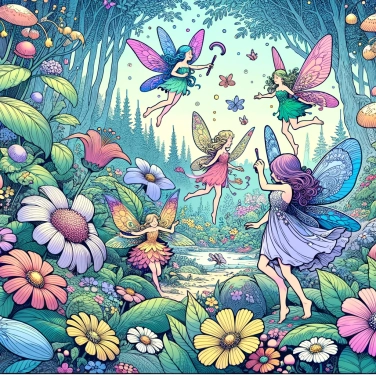
In many tales and legends, fairies are often described as being small and delicate. This characteristic can be interpreted in different ways depending on the cultural and historical context. Some possible explanations for the small size of fairies in stories include symbolic and narrative aspects. For example, their diminutive size can strengthen their connection to the natural world and attribute mysterious powers to them. Furthermore, the smallness of fairies can highlight their agility and ability to escape dangers. This characteristic can also contribute to creating a contrast between fairies and other larger characters, emphasizing their supernatural nature and belonging to another world.
Symbolic interpretation of the size of fairies
According to various symbolic interpretations, the small size of fairies could reflect their connection with the natural and spiritual world. Being small, fairies are associated with delicacy, fragility, and subtlety, qualities that evoke the ephemeral and mysterious nature of these fairy beings. Their smallness also refers to the idea of discretion and stealth, allowing them to easily slip through the cracks of the human world without being noticed.
Furthermore, the reduced size of fairies can symbolize their proximity to elemental forces and their ability to blend harmoniously into the natural environment surrounding them. Their small stature makes them humble and close to the earth, in contrast to the grandeur and pride often associated with human beings. Thus, their diminutive dimension could be interpreted as a manifestation of their humility and respect for nature.
In addition, some traditions consider that the small size of fairies represents their spiritual and immaterial nature. Being of reduced size, they embody lightness, fluidity, and transcendence from the material world. Their symbolic dimension frees them from earthly constraints and places them at the crossroads between the physical world and the spiritual world, where they act as intermediaries between the two spheres of reality.
Ultimately, the symbolic interpretation of the small size of fairies is rich in meanings, making this characteristic a central element of their identity and their mysterious and fascinating essence.
Biological and environmental factors.
Biological and environmental factors can also play a role in the appearance of fairies. In tales and legends, fairies are often associated with nature and the elements. It is therefore possible that their small size reflects their adaptation to specific environments, such as dense forests where they are supposed to reside.
From a biological point of view, the size of organisms is often determined by genetic and environmental factors. In the case of fairies, it is plausible that genetic constraints or specific biological mechanisms may have contributed to their small size. Natural selection may have favored individuals of small stature for reasons such as evading predators or accessing particular resources.
Furthermore, the size of fairies could also be an adaptation to meet other environmental constraints, such as the ability to move easily in restricted environments or to hide effectively. By reducing their size, fairies may have developed special abilities to survive and thrive in their natural habitat.
It is important to note that the size of fairies in tales and legends may be the result of a complex combination of biological, environmental, and cultural factors. By examining these different aspects, it is possible to better understand why fairies were often depicted as small creatures in popular stories.