
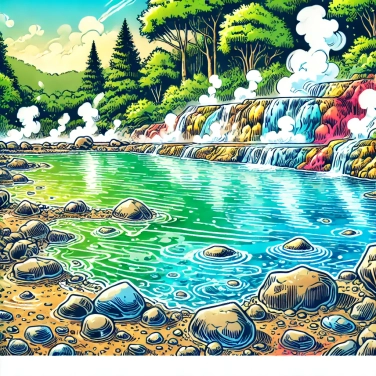
Natural hot springs primarily occur when rainwater or meltwater seeps into the ground, descends deep, and then heats up in contact with areas of geothermal...

The human eye constantly reacts to variations in light to achieve the best possible vision depending on the situation. As soon as a bright light...

When light touches a crystal, certain electrons absorb specific colors (certain wavelengths, that is). They capture the light energy and jump to a higher level, entering an...

To last so long, some trees rely on specialized and constantly active cells, grouped in specific areas called meristems. These meristems regularly renew damaged tissues, much like...

Water and oil are two liquids with very different physical properties, which explains why they don't really get along well together in cooking. Water is...
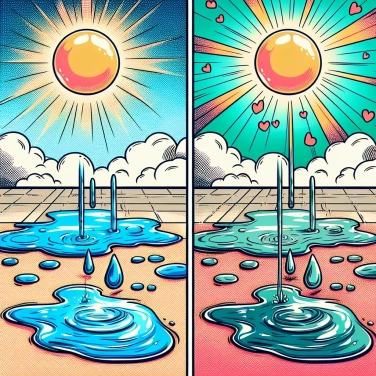
The sun emits radiation that carries thermal energy. When these rays hit a puddle of water, they increase the agitation of the molecules on the...
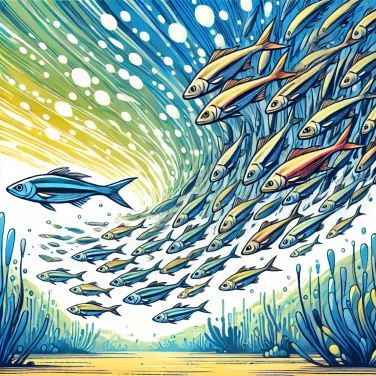
Fish exchange information through quick visual signals and subtle changes in movement. If one turns sharply, its neighbors immediately pick up on this impulse and...

In winter, several viruses, including those of the flu and the cold, survive longer in cold, dry air, making their spread more efficient. The cool...

Water has special properties due to the way its molecules are composed. Each water molecule acts like a tiny magnet, with one side positively charged...

The expression "roof of the world" is not a recent term: it actually comes from the Sanskrit term "Sagarmatha," which roughly means "front (or head)...